Cellulose ether represents a versatile family of water-soluble polymers derived from cellulose, a naturally abundant component of plant cell walls. Its widespread use stems from its unique properties, including thickening, binding, film-forming, and water retention. Understanding cellulose ether is crucial across numerous industries, from construction and pharmaceuticals to food and personal care products, impacting global manufacturing and product quality.
The global market for cellulose ether is experiencing significant growth, driven by increasing demand in developing economies and a growing awareness of its environmentally friendly nature compared to some synthetic alternatives. According to recent reports, the market is projected to reach billions of dollars in the coming years, with consistent annual growth. This growth underscores its importance in addressing contemporary needs for sustainable and high-performance materials.
This comprehensive guide will delve into the intricacies of cellulose ether, exploring its definition, key characteristics, diverse applications, future trends, and potential challenges. By examining these facets, we aim to provide a thorough understanding of this vital material and its role in shaping various industries worldwide.
The Fundamental Properties of Cellulose Ether
The properties of cellulose ether are largely determined by the degree of substitution (DS) and the type of substituent groups attached to the cellulose backbone. Higher DS values generally lead to increased water solubility and modified rheological characteristics. These features are critical in tailoring the material to specific applications.
Cellulose ethers are renowned for their versatility, exhibiting thickening, binding, film-forming, suspending, stabilizing, water retention, and protective colloid properties. This unique combination of characteristics makes them invaluable additives in numerous formulations across diverse industries.
Cellulose Ether: A Global Industry Overview
The global cellulose ether market is a multi-billion dollar industry, with significant production concentrated in Asia-Pacific, particularly in China and India. These regions benefit from abundant cellulose resources and cost-effective manufacturing capabilities. North America and Europe represent key consumer markets, driven by demand from the construction, pharmaceutical, and food industries.
The industry is experiencing a period of innovation, with companies focusing on developing specialized cellulose ether grades with tailored properties to meet the evolving needs of end-users. Sustainability is also a key driver, with increasing emphasis on sourcing cellulose from renewable and responsibly managed forests.
Demand for cellulose ether is closely tied to the growth of its end-use industries. As the global population expands and urbanization continues, the demand for construction materials, pharmaceuticals, and packaged foods – all reliant on cellulose ether – is expected to increase steadily.
Defining and Understanding Cellulose Ether
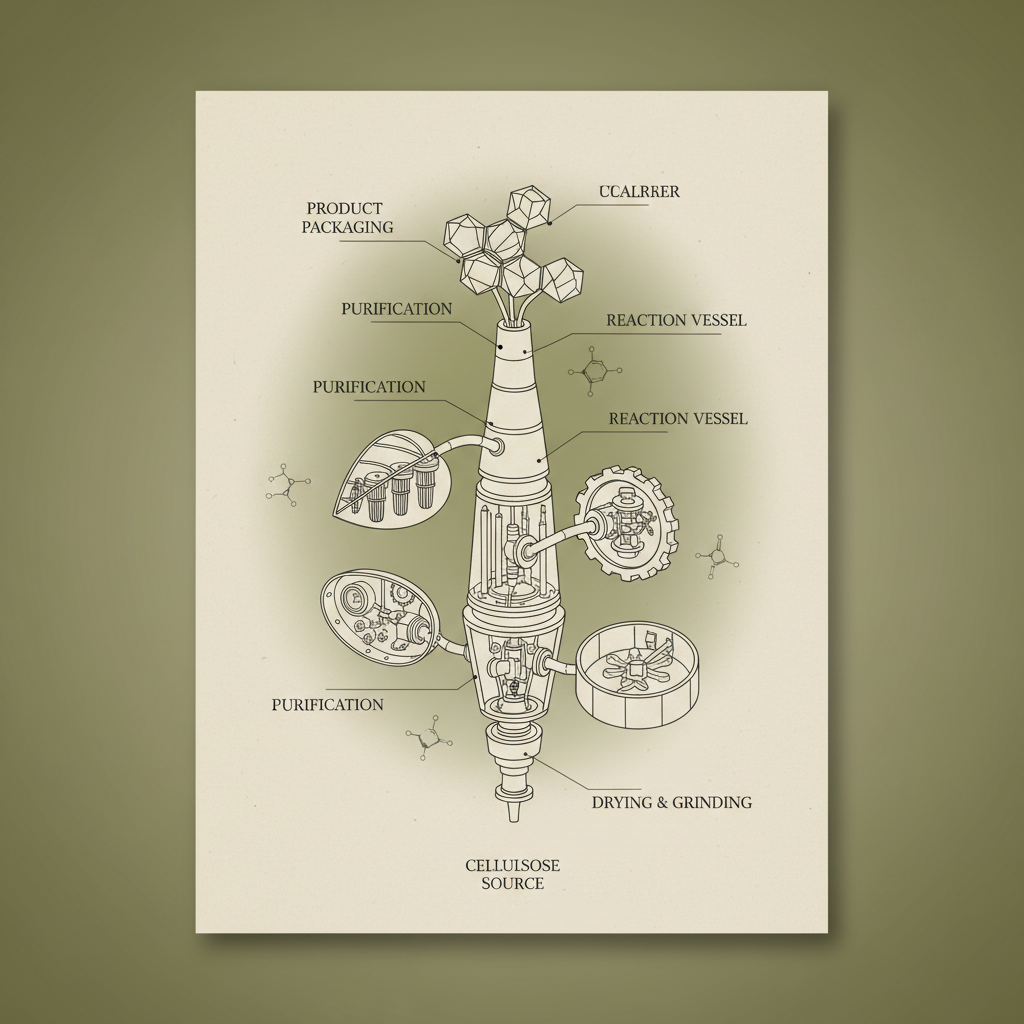
Cellulose ether is a derivative of cellulose, obtained by chemically modifying cellulose through etherification. This process involves reacting cellulose with various reagents, such as methyl chloride, ethyl chloride, or propylene oxide, to introduce ether groups along the cellulose chain. The resulting product possesses unique properties that differ significantly from native cellulose.
The importance of cellulose ether lies in its ability to overcome the limitations of native cellulose, which is insoluble in water and difficult to process. Etherification imparts water solubility, allowing for its use in a wide range of aqueous systems. It’s a critical component in countless modern products, improving functionality and performance.
From thickening agents in food to controlled-release matrices in pharmaceuticals and water-retaining additives in construction materials, cellulose ether plays a vital role in enhancing the quality, stability, and performance of numerous products. Its biocompatibility and biodegradability also make it an attractive alternative to synthetic polymers in many applications.
Core Characteristics of Cellulose Ether
One of the fundamental properties of cellulose ether is its thickening ability. This stems from its high molecular weight and ability to interact with water molecules, increasing the viscosity of solutions. Different types of cellulose ethers exhibit varying thickening efficiencies, depending on their DS and substituent groups.
Water retention is another crucial characteristic. Cellulose ether molecules can absorb and hold significant amounts of water, preventing premature drying and ensuring optimal performance in applications such as construction mortars, adhesives, and personal care products.
Comparative Performance of Different Cellulose Ether Methods
Wide-Ranging Applications of Cellulose Ether
In the construction industry, cellulose ether serves as a vital additive in cement-based mortars, tile adhesives, and renders. It improves workability, water retention, adhesion, and sag resistance, contributing to enhanced building performance and durability.
The pharmaceutical sector utilizes cellulose ether as a binder, disintegrant, film-coating agent, and controlled-release matrix in tablets and capsules. Its biocompatibility and ability to modify drug release rates make it an ideal excipient for various pharmaceutical formulations.
Advantages and Long-Term Value Proposition
Cellulose ether offers a compelling value proposition due to its cost-effectiveness compared to many synthetic alternatives. Derived from a renewable resource, it also contributes to sustainability goals. Its inherent biocompatibility reduces toxicity concerns in applications like pharmaceuticals and food.
The long-term benefits extend to improved product performance and durability, enhanced processing efficiency, and reduced environmental impact. These factors collectively contribute to increased customer satisfaction, brand reputation, and a more sustainable future.
Future Trends and Innovation in Cellulose Ether
Ongoing research and development efforts are focused on creating novel cellulose ether derivatives with enhanced functionality and tailored properties. This includes exploring new etherification reagents and optimizing manufacturing processes to improve product quality and reduce costs.
The integration of nanotechnology and biotechnology holds promise for creating cellulose ether-based materials with unique properties, such as self-healing capabilities or enhanced drug delivery systems. Furthermore, the growing emphasis on bio-based materials is likely to drive increased adoption of cellulose ether in various industries.
Advancements in green chemistry are also leading to more sustainable production methods for cellulose ether, reducing the environmental footprint and aligning with circular economy principles.
Summary of Cellulose Ether Performance Factors
| Cellulose Ether Type |
Water Solubility |
Viscosity Profile |
Typical Applications |
| Methylcellulose (MC) |
Cold water soluble |
Thermally reversible gelation |
Food, pharmaceuticals, construction |
| Hydroxypropyl Methylcellulose (HPMC) |
Cold water soluble |
Good film-forming properties |
Pharmaceuticals, coatings, adhesives |
| Hydroxyethyl Cellulose (HEC) |
Cold water soluble |
High thickening efficiency |
Paints, coatings, personal care |
| Ethylcellulose (EC) |
Insoluble in water, soluble in organic solvents |
Film-forming, hydrophobic |
Coatings, controlled-release matrices |
| Carboxymethyl Cellulose (CMC) |
Cold water soluble |
Stabilizing and suspending agent |
Food, detergents, textiles |
| Hydroxypropyl Cellulose (HPC) |
Cold water soluble |
Excellent film-forming and binding properties |
Pharmaceuticals, coatings, adhesives |
FAQS
Cellulose ether significantly improves the workability, water retention, and adhesion of cement-based materials like mortars and renders. This results in enhanced application properties, reduced cracking, and increased durability, ultimately leading to more robust and long-lasting structures. It also contributes to better tile adhesion and reduces sag, simplifying the construction process.
In pharmaceuticals, cellulose ether serves multiple crucial roles. It functions as a binder to hold tablet ingredients together, a disintegrant to facilitate tablet breakdown in the body, a film-coating agent to protect tablets and control release, and a matrix for controlled-release drug delivery systems. Its biocompatibility and non-toxicity make it a safe and effective excipient.
Yes, cellulose ether is generally considered an environmentally friendly material. It's derived from cellulose, a renewable resource obtained from plant cell walls. Compared to many synthetic polymers, cellulose ether has a lower carbon footprint and is biodegradable under certain conditions. Responsible sourcing of cellulose is crucial to ensure sustainability.
Different cellulose ethers exhibit varying properties based on their substituent groups. HPMC (Hydroxypropyl Methylcellulose) offers excellent film-forming and water-holding capabilities, MC (Methylcellulose) provides thermal gelation, and HEC (Hydroxyethyl Cellulose) demonstrates high thickening efficiency. Each type is tailored for specific applications based on these unique characteristics.
The viscosity of a cellulose ether solution can be adjusted by varying several factors. These include the concentration of cellulose ether, the type of cellulose ether used, the temperature of the solution, and the addition of other additives like salts or pH modifiers. Careful control of these parameters allows for precise viscosity control.
The shelf life of cellulose ether products is typically several years when stored under appropriate conditions, such as in a cool, dry place away from direct sunlight and moisture. Proper packaging and storage are essential to prevent degradation and maintain product quality. Always refer to the manufacturer's specifications for specific storage recommendations.
Conclusion
In conclusion, cellulose ether stands as a remarkably versatile and valuable material, underpinning advancements across diverse industries. Its unique combination of properties – thickening, binding, water retention, and biocompatibility – makes it an indispensable component in construction, pharmaceuticals, food, and numerous other applications. Understanding its characteristics and potential is critical for innovation and sustainable development.
Looking ahead, continued research and development promise even more sophisticated cellulose ether derivatives with tailored functionalities. Embracing sustainable sourcing practices and exploring new applications will unlock further benefits, solidifying its role as a key material in shaping a more innovative and environmentally responsible future.