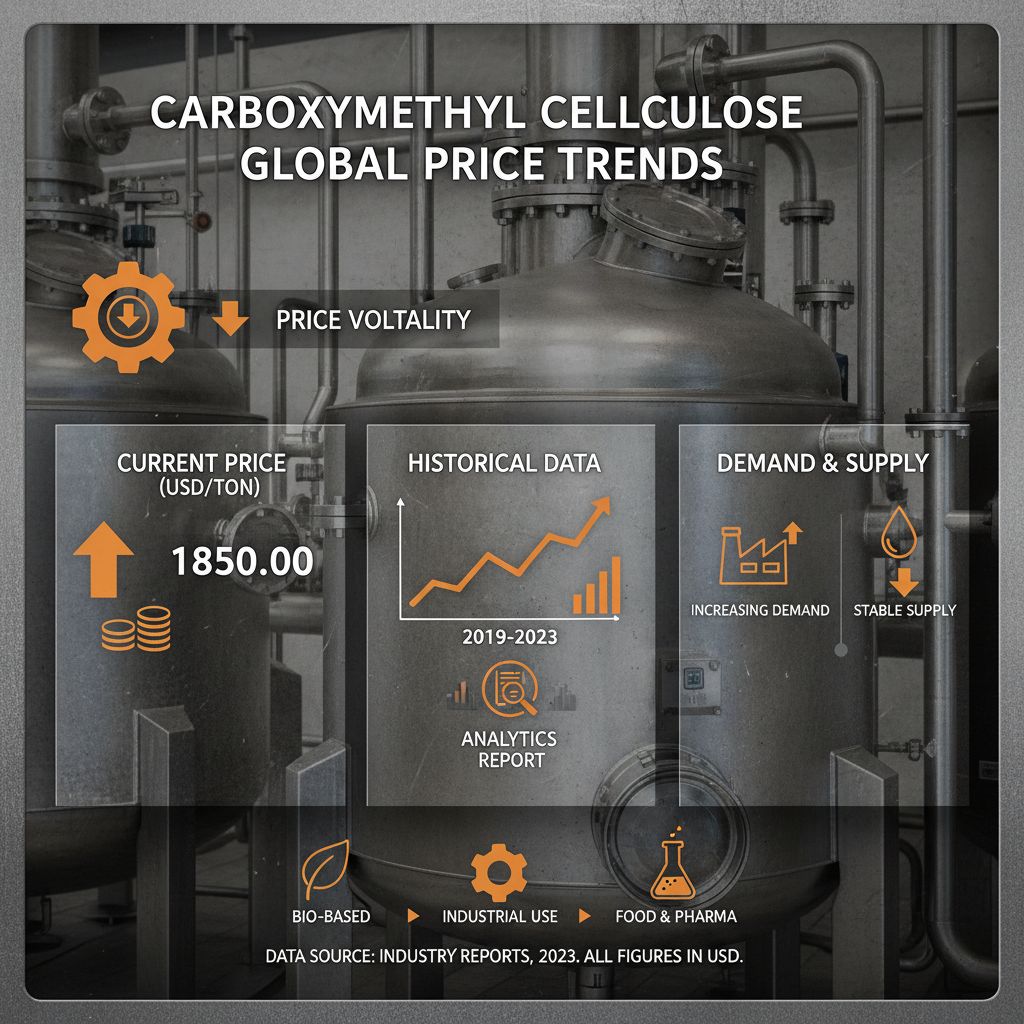
Carboxymethyl cellulose (CMC) price fluctuations are a crucial factor for a vast range of industries, from food production and pharmaceuticals to oil drilling and construction. Understanding the drivers behind these price changes – including raw material costs (cellulose pulp), manufacturing processes, global demand, and geopolitical events – is essential for businesses to manage their budgets effectively and maintain profitability. The affordability of carboxymethyl cellulose directly impacts the final cost of countless products used daily around the globe.
Globally, the carboxymethyl cellulose market is experiencing significant growth, particularly in emerging economies. This increased demand, coupled with supply chain disruptions and raw material scarcity, has contributed to price volatility. Accurate insights into current carboxymethyl cellulose price trends are invaluable for procurement professionals and decision-makers across these sectors, allowing them to anticipate market shifts and secure favorable terms.
CMC is a versatile polymer renowned for its thickening, binding, stabilizing, and film-forming properties. Its widespread application highlights its importance to modern industry and even humanitarian efforts. Monitoring the carboxymethyl cellulose price is therefore not merely a commercial concern, but also has implications for access to essential goods and services.
Understanding the Drivers of carboxymethyl cellulose price
The carboxymethyl cellulose price is significantly influenced by the cost of cellulose pulp, the primary raw material. Fluctuations in pulp prices, often tied to forestry practices and paper industry demands, directly impact CMC production costs. Geopolitical factors, like trade tariffs and political instability in cellulose-producing regions, can also create price spikes.
Furthermore, the manufacturing process itself contributes to pricing. Energy consumption, chemical reagent costs, and adherence to stringent quality control standards all play a role. Increasing environmental regulations, particularly regarding wastewater treatment, can also add to production expenses, and subsequently, the carboxymethyl cellulose price.
Defining carboxymethyl cellulose price
The term ‘carboxymethyl cellulose price’ encompasses the total cost of obtaining CMC, taking into account not only the price per unit weight (typically per kilogram or pound) but also associated costs such as shipping, insurance, import duties, and potential brokerage fees. This holistic view is critical for accurate cost analysis and budgeting.
The price can vary dramatically based on several key specifications, including viscosity grade, degree of substitution, particle size, and purity. Higher viscosity grades, which are often required for demanding applications, typically command a premium price. Similarly, pharmaceutical-grade CMC, requiring exceptionally high purity, is significantly more expensive than industrial-grade material.
Understanding the specific CMC grade needed for a particular application and carefully comparing quotes from multiple suppliers is crucial for securing the most competitive carboxymethyl cellulose price.
Key Factors Influencing carboxymethyl cellulose price
Raw Material Availability: Cellulose pulp is the cornerstone of CMC production. Supply chain disruptions, whether due to weather events, logistical challenges, or geopolitical issues, directly impact pulp prices and, consequently, the carboxymethyl cellulose price.
Production Capacity & Demand: Global production capacity and overall demand for CMC exert significant pressure on prices. Increased demand, particularly from rapidly growing industries like oil drilling, can strain supply, driving up costs. Capacity expansions and new entrants into the market can help stabilize prices, but require substantial investment.
Manufacturing Costs: Energy prices, labor costs, and the expenses associated with maintaining stringent quality control standards all contribute to the overall cost of CMC production. Investments in more efficient manufacturing technologies can help mitigate these costs.
Global Applications & the Impact of carboxymethyl cellulose price
The carboxymethyl cellulose price impacts numerous sectors. In the food industry, it’s used as a thickener and stabilizer in sauces, ice cream, and baked goods. Pharmaceutical applications include use as a binder in tablets and a suspending agent in liquid medications. The oil and gas industry utilizes CMC extensively in drilling fluids to control viscosity and prevent fluid loss.
Construction relies on CMC to improve the workability and water retention of cement-based materials. The textile industry employs it as a sizing agent and printing thickener. In regions with limited infrastructure, affordable CMC is vital for ensuring quality control and supply chain efficiency across these diverse applications.
Comparison of carboxymethyl cellulose price by Application
Advantages of Stable carboxymethyl cellulose price
Stable carboxymethyl cellulose price provides businesses with greater predictability in their cost calculations, facilitating accurate budgeting and financial planning. This stability encourages investment in R&D and innovation, as companies can confidently forecast returns.
Long-term price stability also fosters stronger supplier relationships, promoting collaboration and ensuring a reliable supply chain. This is particularly crucial in industries where CMC is a critical ingredient or component, ensuring uninterrupted production and consistent product quality.
Future Trends Affecting carboxymethyl cellulose price
The growing demand for sustainable and bio-based materials is likely to impact CMC production. Increased investment in alternative cellulose sources, such as agricultural waste and algae, could potentially reduce reliance on traditional wood pulp, influencing the carboxymethyl cellulose price.
Technological advancements in manufacturing processes, such as enzymatic hydrolysis and microfluidic reactors, promise to enhance efficiency and reduce production costs. Automation and digitalization will play a key role in optimizing supply chain management and minimizing price volatility.
Stricter environmental regulations regarding waste disposal and water usage will also drive innovation and potentially increase production costs, requiring manufacturers to adopt more sustainable practices.
Challenges and Mitigation Strategies for carboxymethyl cellulose price Volatility
One major challenge is the inherent variability in cellulose pulp prices, driven by factors outside the control of CMC manufacturers. Mitigation strategies include diversifying sourcing options, establishing long-term contracts with pulp suppliers, and investing in inventory management systems.
Supply chain disruptions, whether caused by natural disasters, political instability, or logistical bottlenecks, pose another significant risk. Building resilient supply chains, diversifying geographical sourcing, and maintaining buffer stocks are essential for mitigating these risks.
Fluctuations in currency exchange rates can also impact the carboxymethyl cellulose price for international buyers. Utilizing hedging strategies and negotiating contracts in stable currencies can help minimize currency-related risks.
Summary of Challenges and Mitigation Strategies for carboxymethyl cellulose price Volatility
| Challenge |
Impact on carboxymethyl cellulose price |
Mitigation Strategy |
Implementation Difficulty (1-10) |
| Cellulose Pulp Price Volatility |
Directly increases production costs |
Diversified sourcing, long-term contracts |
6 |
| Supply Chain Disruptions |
Reduces availability, increases lead times |
Resilient supply chains, buffer stocks |
8 |
| Currency Exchange Rate Fluctuations |
Impacts import/export costs |
Hedging strategies, stable currency contracts |
7 |
| Geopolitical Instability |
Disrupts supply routes, increases risk |
Geographical diversification, risk assessment |
9 |
| Increased Environmental Regulations |
Raises production costs (waste treatment) |
Sustainable manufacturing practices, investment in cleaner technologies |
5 |
| Competition from Alternative Polymers |
Potential price pressure |
Focus on CMC's unique properties, innovation |
4 |
FAQS
The biggest drivers of carboxymethyl cellulose price volatility are the cost of raw cellulose pulp, global supply and demand dynamics, energy prices for manufacturing, and geopolitical events impacting pulp production regions. Unexpected disruptions to the supply chain, such as natural disasters or trade restrictions, can also cause significant price swings.
Accurate forecasting is challenging, but monitoring key indicators such as cellulose pulp prices, global economic growth (particularly in key consuming regions), and energy market trends can provide valuable insights. Engaging with industry analysts and establishing relationships with reliable CMC suppliers can also help you stay informed.
Pharmaceutical grade CMC demands a much higher level of purity and quality control, requiring more sophisticated manufacturing processes and stringent testing. This naturally leads to a significantly higher carboxymethyl cellulose price compared to industrial grade, which is acceptable for less demanding applications.
Building strong relationships with suppliers, committing to long-term contracts with volume discounts, and diversifying your supplier base can all help you negotiate more favorable pricing. Providing accurate demand forecasts can also assist suppliers in optimizing their production and offering competitive rates.
Currency fluctuations can significantly affect the final cost of CMC for international buyers. A strengthening import currency will reduce the price, while a weakening import currency will increase it. Utilizing hedging strategies or negotiating contracts in a stable currency can help mitigate these risks.
The demand for sustainably sourced CMC is growing, and manufacturers investing in eco-friendly production processes and utilizing alternative cellulose sources may be able to command a premium price. Increased adoption of circular economy principles and waste reduction strategies can also contribute to cost savings and a more sustainable future for CMC.
Conclusion
Understanding the factors that drive carboxymethyl cellulose price is critical for businesses across diverse industries. From raw material sourcing and manufacturing costs to global demand and geopolitical events, a comprehensive grasp of these influences enables informed decision-making, effective budgeting, and supply chain resilience. By proactively monitoring market trends and adopting mitigation strategies, companies can navigate price volatility and secure a stable supply of this essential polymer.
Looking ahead, the future of CMC pricing will be shaped by sustainability initiatives, technological advancements, and evolving regulatory landscapes. Embracing innovation, prioritizing sustainable sourcing, and fostering strong supplier relationships will be key to ensuring long-term cost-effectiveness and a secure supply of carboxymethyl cellulose. Visit our website at www.pezetech.com to learn more about our CMC products and services.