Hydrophobically Modified Hydroxyethyl Cellulose | Industrial Polymer Insights
Understanding hydrophobically modified hydroxyethyl cellulose in Industrial Applications
Having spent quite a stretch in the industrial equipment side of things, I’ve grown a particular respect for materials that blend chemistry with practical utility. You know, the kind you don't just read about but handle day in and day out — like hydrophobically modified hydroxyethyl cellulose, often abbreviated as HEMHEC. It’s a bit of a mouthful, but this polymer has quietly carved a niche for itself, especially when you need a polymer that can handle tough, watery environments without throwing in the towel.
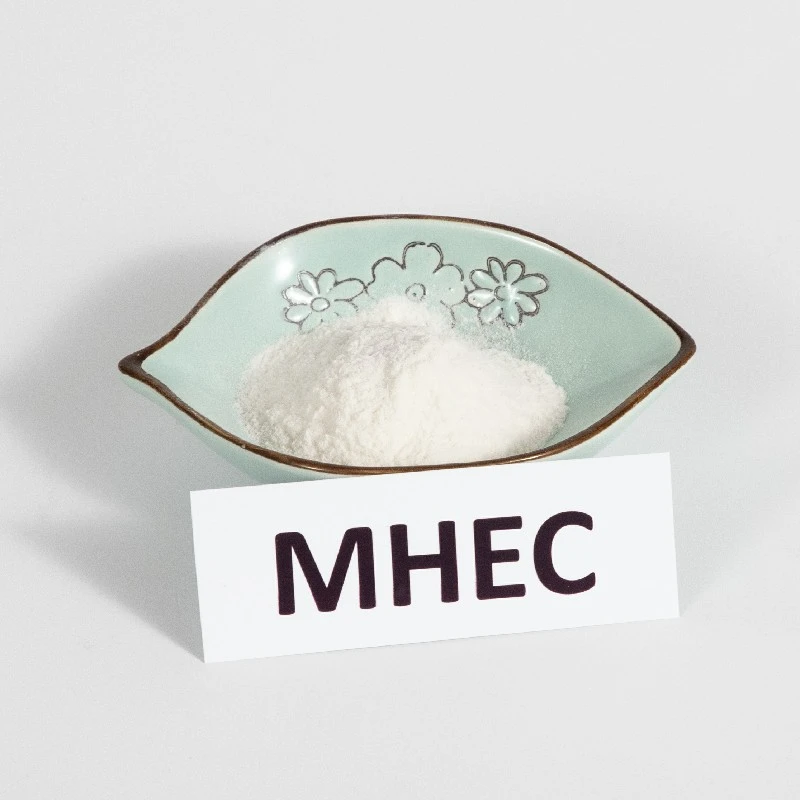
At its core, hydroxyethyl cellulose (HEC) is a cellulose derivative, naturally sourced but tweaked in the lab to boost water solubility and thickening properties. Now, add a hydrophobic modification — think of it as giving the polymer little water-hating “tails” — and you get a product that can stabilize emulsions, improve rheology, and fight issues where plain HEC might falter. In real terms: it's perfect for coatings, drilling fluids, adhesives, even personal care products that need to behave reliably under different stresses.
Oddly enough, the industry often overlooks how subtle changes in molecular design, like hydrophobic grafting, can create sweeping effects on performance. It felt like only after working closely with these polymers in formulations that I truly appreciated why formulators might prefer hydrophobically modified variants over standard HEC. It’s not just about thickening; it’s about tuning viscosity, improving water resistance, and even controlling foam.
Product Specifications at a Glance
| Specification | Typical Value |
|---|---|
| Appearance | White to off-white powder |
| Viscosity (2% aqueous solution) | 3000–7000 mPa·s (Brookfield, 25°C) |
| Degree of Substitution | 0.2–0.6 (Hydrophobic groups per anhydroglucose unit) |
| pH Range | 4 – 11 |
| Solubility | Cold water dispersible |
Many engineers I’ve spoken with highlight that working temperature and pH tolerance are critical. What’s neat here is that hydrophobically modified versions maintain viscosity better across a wider pH range compared to unmodified HECs. This gives you flexibility in formulation without worrying about sudden viscosity drops.
By the way, it reminds me of a client we worked with recently who faced issues stabilizing their latex paint at higher temperatures. Switching to a hydrophobically modified hydroxyethyl cellulose helped keep their formulation stable and smooth, even under hot factory conditions — a small change with big savings.
Vendor Comparison: Popular HEMHEC Producers
| Feature | Pezetech | Competitor A | Competitor B |
|---|---|---|---|
| Product Consistency | High (Tight spec control) | Medium (Some batch variation) | Medium-High |
| Customization Options | Yes, tailored DS and viscosity | Limited | Somewhat flexible |
| Technical Support | Excellent, hands-on | Average | Good |
| Pricing | Competitive | Higher | Variable |
Frankly, when considering a source for hydrophobically modified hydroxyethyl cellulose, your decision shouldn’t just hinge on price or specs alone. I often recommend weighing technical support and customization — because no two applications are identical. Pezetech, for example, tends to shine with their hands-on approach, which, if you ask someone in the field, usually saves time in R&D.
To sum up, this polymer isn’t just another additive. It’s a smart material, designed to overcome the limitations of standard cellulose ethers. Whether it's thickening a paint, stabilizing a drilling fluid, or giving personal care products a luxurious feel — its hydrophobic tweaks bring versatility and reliability.
If you haven’t tried it yet, maybe give hydrophobically modified hydroxyethyl cellulose a chance in your next formulation. Sometimes, it’s these subtle innovations that make all the difference.
— Experience counts, and this material pretty much proves it.
References:
- Industrial Polymers Handbook, J. Mark
- Technical Data Sheet, Pezetech Hydrophobically Modified Hydroxyethyl Cellulose
- Formulating with Cellulose Ethers: A Practical Guide, ChemPro Publications
-
Top Guide to Selecting Professional vae emulsion manufacturersNewsApr.16,2026
-
Viscosity of HPMCNewsApr.15,2026
-
HPMC Powder UsesNewsApr.15,2026
-
Understanding VAE Emulsion for Modern Industrial CoatingsNewsApr.09,2026
-
Comprehensive Guide to Redispersible Emulsion Powder and its ApplicationsNewsApr.07,2026
-
Comprehensive Guide to Redispersible Latex Powder for Construction ApplicationsNewsApr.04,2026