HEC Chemical - High-Purity Thickener & Rheology Modifier
Hec Chemical is a key solution in the chemical industry industry, specifically within fine chemicals and cellulose ether. This article explores how Pengze Technology (Shijiazhuang) Co., Ltd. supports professionals with durable, high-performance products, and explains why this product is an ideal choice for businesses in these sectors.
Table of Contents
- Hec Chemical Overview
- Benefits & Use Cases of Hec Chemical in cellulose ether
- Cost, Maintenance & User Experience
- Sustainability & Market Trends in chemical industry
- Conclusion on Hec Chemical from Pengze Technology (Shijiazhuang) Co., Ltd.
Hec Chemical Overview
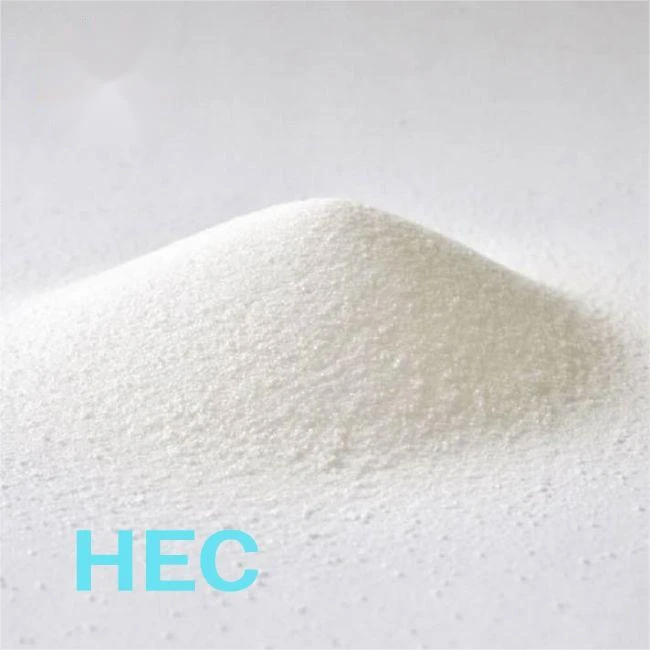
In the cellulose ether category, the Hec Chemical—commonly known by the HEC chemical name “hydroxyethyl cellulose” (HEC)—is a nonionic, water-soluble polymer derived from natural cellulose. Sometimes referred to in search as “hydroxy cellulose” or HEC hydroxyethyl cellulose, this versatile thickener and rheology modifier delivers stable viscosity, film formation, and suspension across a wide pH window. Typical industrial grades span ~300–100,000 mPa·s (Brookfield, 2% aqueous), with controlled molar substitution (commonly ~1.5–3.5) for reproducible performance. Because it is nonionic, HEC exhibits strong salt tolerance and broad surfactant compatibility, making it a workhorse in waterborne formulations.
Pengze Technology (Shijiazhuang) Co., Ltd. supplies high-consistency HEC designed for demanding B2B applications in fine chemicals. Customers value its clean dissolution profile, low gel specks, and tight viscosity control from batch to batch. For example, in water-based coatings and inks, Pengze’s HEC helps engineers fine-tune Stormer (KU) and ICI viscosity, balance leveling with sag resistance, and maintain tint strength—all while enabling robust pumpability. Whether you search for “.hec chemicals” or specialty cellulose ethers by application, Pengze’s technical team provides formulation guidance and tailored grades to align with your plant conditions and quality targets.
Benefits & Use Cases of Hec Chemical in cellulose ether
As a cellulose ether, HEC functions as a primary thickener, stabilizer, and water-retention aid across multiple verticals. In waterborne coatings and inks, it delivers pseudoplastic flow for excellent brush/roller feel, reduced spatter, and smooth leveling. In detergents and cleaners, HEC maintains clarity and viscosity in high-electrolyte systems and remains compatible with anionic, nonionic, and amphoteric surfactants. Personal care formulators use HEC for silky rheology in shampoos, body washes, and gels without compromising transparency. In oilfield fluids, HEC contributes to viscosity building, friction reduction, and fluid-loss mitigation in brines. It can also aid workability and water retention in select construction systems and adhesives.
Competitive advantages of Pengze’s Hec Chemical include customizable hydration speed (fast or delayed), high solution clarity, consistent particle size for predictable dissolution, and strong salt and pH tolerance (approx. pH 2–12 performance window). These traits simplify scale-up and reduce line downtime associated with viscosity drift. Pengze Technology (Shijiazhuang) Co., Ltd. couples product quality with application expertise—supporting customers to fine-tune dosage (often 0.2–1.0% in many waterborne systems), optimize mixing energy, and shorten hydration time, ultimately improving throughput and end-use consistency.
Cost, Maintenance & User Experience
Total cost of ownership for HEC hinges on dose efficiency, batch-to-batch reproducibility, and operational reliability. Pengze’s controlled substitution and tight viscosity specs mean fewer reformulations, less rework, and steadier KU/ICI targets—key levers for ROI in high-throughput plants. Reliable lead times and standard industrial packaging help reduce inventory risk and avoid costly production stops. For plants managing multiple SKUs, the ability to use one HEC grade across adjacent formulations can simplify procurement and lower carrying costs.
From a maintenance perspective, proper handling ensures best results: store dry, add powder into a strong vortex to avoid “fisheyes,” consider a pre-slurry (e.g., in glycols or non-solvent media) for delayed hydration, and apply high shear initially followed by gentle mixing to complete dissolution. Feedback from fine-chemical customers highlights clean make-down, low gel residues, and stable viscosity after aging—reducing filter load and minimizing off-spec batches. In practice, these user experiences translate to higher line efficiency and predictable quality, which is where the Hec Chemical consistently proves its value.
Sustainability & Market Trends in chemical industry
Market demand is shifting decisively toward waterborne, low-VOC systems, driven by global regulations and customer preference for safer, more sustainable chemistries. As a cellulose ether sourced from renewable cellulose, HEC supports this transition by enabling high-performance water-based formulations that displace solvent systems. Its nonionic character, broad compatibility, and efficient thickening allow formulators to hit performance targets with fewer additives—streamlining recipes and potentially reducing environmental footprint. Downstream, trends in microplastic reduction and EHS compliance further favor polymer choices like hydroxyethyl cellulose.
Pengze Technology (Shijiazhuang) Co., Ltd. positions its Hec Chemical portfolio with sustainability in mind: consistent quality that helps cut waste, technical guidance that minimizes trial-and-error, and a commitment to responsible manufacturing practices. For B2B decision makers balancing compliance, performance, and cost, partnering with a forward-thinking HEC supplier aligns procurement with ESG goals while keeping innovation pipelines on track.
Conclusion on Hec Chemical from Pengze Technology (Shijiazhuang) Co., Ltd.
For the chemical industry—especially fine chemicals and cellulose ether—the Hec Chemical (HEC hydroxyethyl cellulose) delivers dependable thickening, rheology control, and stability across a wide pH and electrolyte range. Pengze Technology (Shijiazhuang) Co., Ltd. combines rigorous quality control with application know-how to help plants streamline formulations, achieve consistent viscosity targets, and accelerate commercialization. If you need a high-performance, supply-assured HEC that supports both operational efficiency and sustainability goals, Pengze is ready to assist.
- Recap the value of Hec Chemical in chemical industry / fine chemicals / cellulose ether.
- Reinforce Pengze Technology (Shijiazhuang) Co., Ltd.’s reputation.
- Strong CTA: - Contact us: email: ben@pezetech.com - Visit our website: https://www.pezetech.com
-
Top Guide to Selecting Professional vae emulsion manufacturersNewsApr.16,2026
-
Viscosity of HPMCNewsApr.15,2026
-
HPMC Powder UsesNewsApr.15,2026
-
Understanding VAE Emulsion for Modern Industrial CoatingsNewsApr.09,2026
-
Comprehensive Guide to Redispersible Emulsion Powder and its ApplicationsNewsApr.07,2026
-
Comprehensive Guide to Redispersible Latex Powder for Construction ApplicationsNewsApr.04,2026