Hydroxyethylcellulose: Insights from a Seasoned Industrial Equipment Expert
Understanding hydroxyethylcellulose: A Veteran’s Take From the Industrial Equipment Floor
You know, after spending years knee-deep in the industrial equipment sector, I’ve seen my fair share of thickening agents, binders, and stabilizers. Among them, hydroxyethylcellulose (or HEC, as the tech manuals like to abbreviate) stands out as a rather versatile and reliable polymer. Frankly, it feels like the quiet workhorse that keeps so many formulations running smoothly — and yet it doesn’t always get the spotlight it deserves.
So here’s the lowdown on HEC from someone who has handled it firsthand. Oddly enough, despite its seeming simplicity, the stuff can be a bit of a chameleon, performing differently depending on concentration, molecular weight, and the source cellulose material. Many engineers I spoke with say it’s the go-to viscosity modifier for everything from paints and adhesives to drilling fluids — honestly, it’s kind of everywhere in the industrial kitchen.
What Makes Hydroxyethylcellulose Tick?
In real terms, HEC is derived from cellulose — that fibrous stuff found in plants — which is chemically modified to incorporate hydroxyethyl groups. This modification makes it water-soluble and capable of thickening aqueous systems without altering pH drastically, which is quite a blessing for many formulations. It doesn’t gel; rather, it creates smooth, stable solutions, which is why you often find it replacing natural gums where consistency matters.
From my perspective, one standout feature is how customizable it is. Vary the degree of substitution or molecular weight, and you tweak viscosity, film-forming behavior, hydration speed... you name it. Custom grades are a big deal in our industry, because no two processes are identical.
| Property | Value |
|---|---|
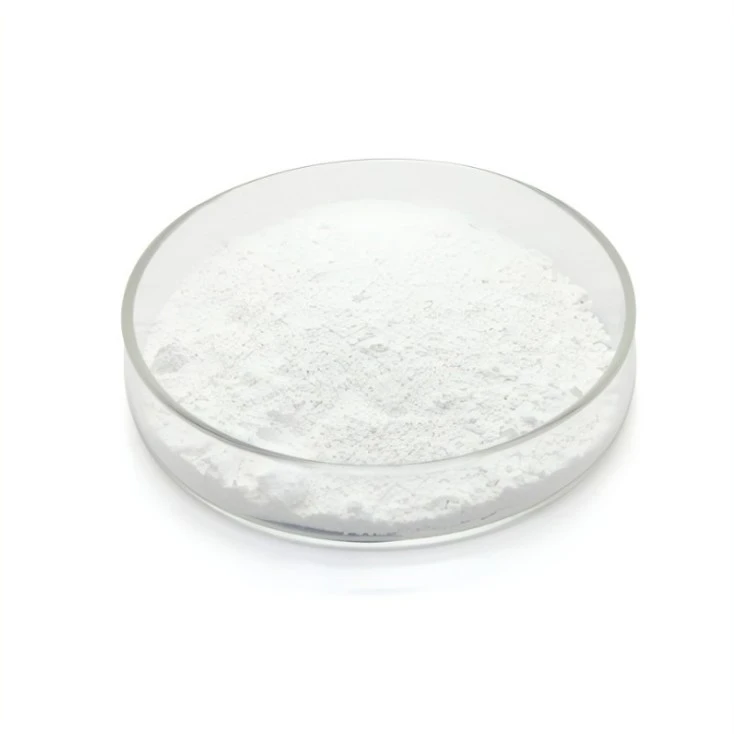
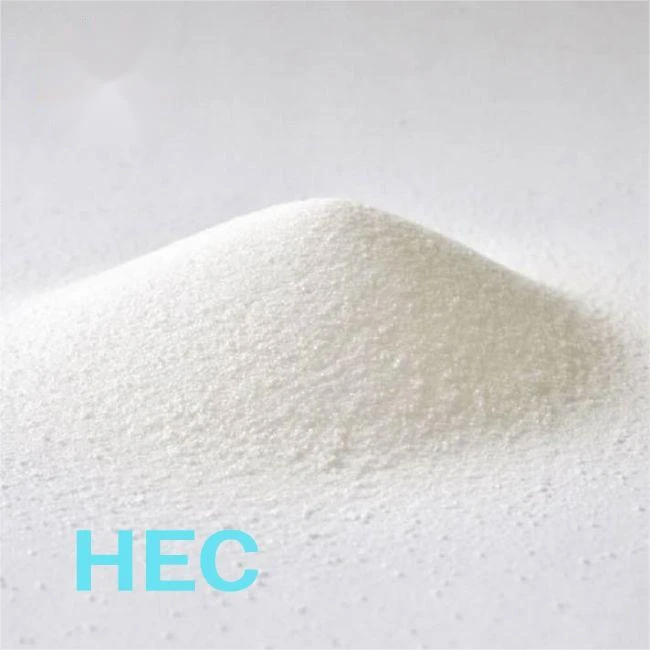
| Appearance | White to Off-white Powder |
| Molecular Weight Range | 90,000 to 1,200,000 g/mol |
| Degree of Substitution (DS) | 0.2 - 0.4 |
| Bulk Density | 500 - 600 kg/m³ |
| Solubility | Cold Water Soluble |
Industry Uses That Make You Nod in Recognition
Hydroxyethylcellulose's ability to control rheology makes it prized in construction materials (think tile adhesives and cement slurries), personal care products (lotions and shampoos), and oilfield applications. I recall a client once praised HEC for drastically improving pumpability in a thick drilling mud formulation—a small tweak that prevented costly equipment downtime. It’s satisfying when these polymers do their job quietly but effectively, isn’t it?
Given its non-ionic and generally inert nature, HEC causes minimal interference with other additives, which means formulating teams love it for stabilizing suspensions or preventing sedimentation. Another point to consider is its biodegradability — not perfect but better than many synthetic alternatives — so the environmental profile is gradually gaining attention.
Vendor Comparison: Picking the Right HEC Supplier
Choosing a supplier can be more nuanced than just price and delivery. I've learned that consistency batch-to-batch, technical support, and available customization options often take precedence.
| Vendor | Grade Variety | Typical Lead Time | Technical Support | Price Range |
|---|---|---|---|---|
| Pezetech | Wide (custom available) | 2-3 weeks | Strong (application assistance) | Moderate |
| Supplier B | Limited (standard only) | 1 week | Basic | Low |
| Supplier C | Moderate | 4 weeks | Medium | High |
Incidentally, the folks at Pezetech have always impressed me with their flexibility. You can literally call them up, describe your unique process needs, and they'll help dial in a grade that fits. That kind of collaboration isn’t as common as you might think, especially in commodity chemical supply.
Before I wrap up, one nugget worth sharing: in one project for a specialty coating, switching to a HEC variant with lower molecular weight improved drying times without compromising film integrity. A reminder that sometimes the devil truly is in the details.
So yeah, hydroxyethylcellulose probably isn’t headline news — but from where I’m standing, it’s one of those unsung heroes that keeps industrial formulations reliable, adaptable, and cost-effective.
Next time you see a thickened solution or water-based product performing effortlessly, there’s a good chance HEC is quietly doing its thing behind the scenes.
Cheers to that humble polymer!
References:
- "Cellulose Ethers: Fundamentals and Applications," Springer Publishing, 2020.
- Industry reports & product bulletins from Pezetech.
- Field interviews with industrial chemists and product developers, 2018-2023.
-
Top Guide to Selecting Professional vae emulsion manufacturersNewsApr.16,2026
-
Viscosity of HPMCNewsApr.15,2026
-
HPMC Powder UsesNewsApr.15,2026
-
Understanding VAE Emulsion for Modern Industrial CoatingsNewsApr.09,2026
-
Comprehensive Guide to Redispersible Emulsion Powder and its ApplicationsNewsApr.07,2026
-
Comprehensive Guide to Redispersible Latex Powder for Construction ApplicationsNewsApr.04,2026