Paste printing represents a revolutionary approach to rapid deployment and construction, leveraging specialized paste-like materials extruded to create durable structures. This technology is gaining global significance as a solution for housing shortages, disaster relief, and infrastructure development in challenging environments. It offers a swift, cost-effective, and potentially sustainable alternative to traditional building methods, addressing critical needs across diverse sectors.
The growing demand for affordable housing, exacerbated by natural disasters and population displacement, is driving the adoption of paste printing worldwide. Organizations like the UN and the World Bank are increasingly interested in innovative construction techniques that can deliver safe and reliable shelters quickly. With the global construction industry contributing significantly to carbon emissions, the development of eco-friendly paste printing materials is becoming a priority.
Ultimately, understanding paste printing's capabilities, limitations, and future potential is crucial for professionals in construction, humanitarian aid, and sustainable development. This knowledge unlocks opportunities to improve lives, build resilient communities, and reduce the environmental impact of construction. Exploring further into paste printing is highly recommended.
Introduction to Paste Printing
Paste printing, at its core, is about material science and additive manufacturing. It utilizes carefully formulated paste-like mixtures—often cementitious or polymer-based—which are extruded layer by layer to construct three-dimensional structures. This process differs significantly from conventional building methods that rely on prefabricated components or extensive on-site assembly.
The technology’s adaptability is a key feature, allowing for the creation of diverse architectural forms and complex geometries. Its potential to minimize waste, reduce labor costs, and accelerate construction timelines makes it particularly attractive in contexts where speed and efficiency are paramount, like emergency housing or remote infrastructure projects. Further information about paste printing is available on our website.
Defining Paste Printing
Paste printing is an additive manufacturing technique where a specialized material is deposited in successive layers to build a three-dimensional object. Unlike traditional construction, which often involves subtractive processes (cutting, shaping) or assembling pre-made parts, paste printing builds from the ground up. This method allows for greater design freedom and minimizes material waste.
The connection to modern industry lies in its ability to automate construction processes, similar to 3D printing in manufacturing. However, paste printing typically deals with larger scales and more robust materials suitable for structural applications. It directly addresses the growing need for efficient and cost-effective construction solutions, particularly in areas with limited resources or skilled labor.
In the context of humanitarian needs, paste printing offers a rapid and scalable means of providing shelter and infrastructure after natural disasters or in refugee camps, where conventional building methods might be too slow or impractical. It truly embodies the power of innovative paste printing technologies.
Core Components of Paste Printing
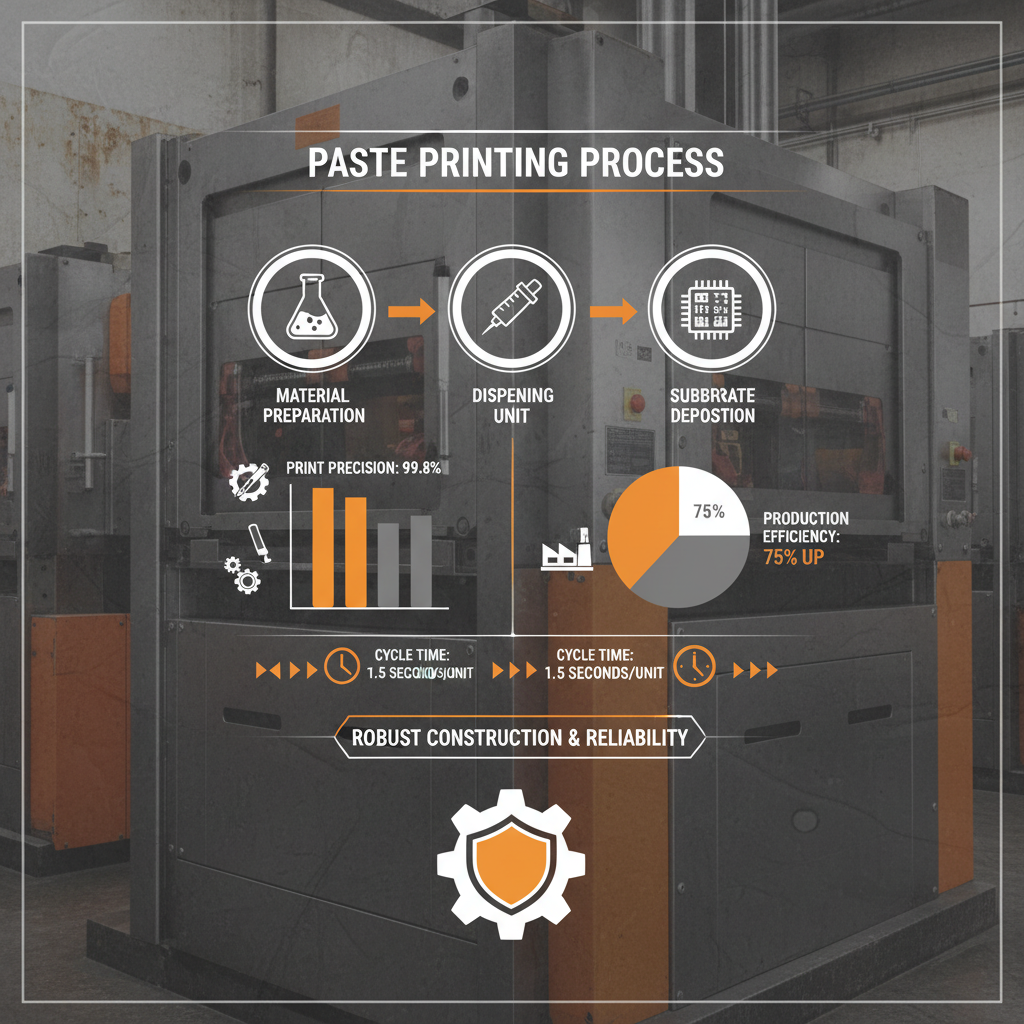
Several core components are critical to the success of paste printing. First, the material formulation is paramount. The paste must possess the right viscosity, flowability, and setting time to ensure structural integrity and maintain shape during and after extrusion. Second, the printing hardware—the extruder and robotic arm—must be precise and reliable, capable of controlled material deposition.
Third, process control is essential. Factors like printing speed, layer thickness, and material flow rate must be carefully managed to avoid defects and ensure consistent quality. Fourth, design software plays a critical role in translating architectural plans into machine-readable instructions. Finally, post-processing techniques like surface finishing or reinforcement may be necessary to enhance the structure's durability and aesthetic appeal.
These components work in synergy to create a streamlined and efficient building process. Advancements in each area are continually pushing the boundaries of what is possible with paste printing, allowing for increasingly complex and resilient structures.
Key Advantages of Paste Printing
Paste printing boasts several key advantages over traditional construction. Speed is a significant factor, with structures being built much faster than with conventional methods, often reducing construction timelines by 50-70%. Cost-effectiveness is another benefit, stemming from reduced labor costs, minimized material waste, and the potential to use locally sourced materials.
Beyond these, design freedom allows for the creation of complex and customized structures that would be difficult or impossible to build using traditional techniques. This unlocks architectural innovation and enables the construction of unique and functional spaces.
Advantages of Different Paste Printing Methods
Global Applications of Paste Printing
The applications of paste printing are diverse and expanding. In post-disaster relief operations, it provides a rapid means of building temporary shelters or more permanent housing for displaced populations. In remote industrial zones, where access to skilled labor and traditional building materials is limited, it enables the construction of essential infrastructure like workshops, storage facilities, and living quarters.
We’re also seeing increasing adoption in affordable housing projects, particularly in developing countries. Organizations are leveraging paste printing to address housing shortages and provide safe, durable homes for low-income communities. Several pilot projects are underway in regions of Africa, the Middle East, and Latin America, demonstrating the technology’s potential to transform the construction landscape.
Long-Term Value and Benefits
The long-term value of paste printing extends beyond immediate cost savings and construction speed. The potential for sustainability is significant, as it allows for the utilization of locally sourced materials and reduces waste generation. Furthermore, the durability and resilience of paste-printed structures contribute to reduced life-cycle costs and minimize the need for frequent repairs or replacements.
The social impact is also substantial. Providing safe, affordable housing enhances the well-being of communities and contributes to economic stability. The technology's ease of use and relatively low skill requirements empower local workforces and foster economic growth. This is a powerful shift that paste printing is facilitating.
Ultimately, paste printing represents a step towards a more resilient, sustainable, and equitable built environment, fostering trust and innovation in the construction industry.
Future Trends and Innovation
The future of paste printing is incredibly promising. Ongoing research is focused on developing new and improved paste materials, incorporating recycled materials and bio-based polymers to further enhance sustainability. Integration with digital technologies, such as Building Information Modeling (BIM) and Artificial Intelligence (AI), will streamline the design and construction process and optimize material usage.
Automation and robotics will play an increasingly important role, enabling larger-scale and more complex projects. The development of mobile paste printing units will allow for on-site construction in even the most remote and challenging environments. Furthermore, exploring the use of renewable energy sources to power paste printing operations will contribute to a lower carbon footprint.
These advancements will solidify paste printing as a key component of the future of construction, driving innovation and creating a more sustainable and resilient built world.
Summary of Challenges and Potential Solutions in Paste Printing
| Challenge |
Impact on Project |
Potential Solution |
Implementation Cost (1-10) |
| Material Consistency |
Structural Integrity |
Advanced Material Mixing |
6 |
| Printing Speed |
Project Timelines |
Multi-Nozzle Extruders |
8 |
| Environmental Factors |
Material Setting |
Environmental Control Systems |
7 |
| Scalability |
Large-Scale Projects |
Automated Robotic Systems |
9 |
| Regulatory Approvals |
Project Permitting |
Collaboration with Building Codes |
5 |
| Skill Gap |
Operational Efficiency |
Comprehensive Training Programs |
4 |
FAQS
Paste printing offers a compelling alternative due to its speed, cost-effectiveness, and design flexibility. It significantly reduces construction time and labor costs, minimizes material waste, and allows for the creation of complex geometries that are difficult or impossible to achieve with traditional methods. This makes it particularly attractive for projects in challenging environments or where rapid deployment is critical.
The lifespan of a paste-printed structure depends on several factors, including the materials used, the quality of the printing process, and the environmental conditions. With proper material formulation and construction techniques, paste-printed structures can achieve a lifespan comparable to or even exceeding that of conventionally built structures, often lasting for decades. Regular maintenance and appropriate protective coatings can further extend its durability.
Paste printing generally has a lower environmental impact than conventional construction. It minimizes material waste, reduces transportation costs, and can utilize locally sourced materials. The potential to use sustainable and recycled materials further reduces its carbon footprint. However, the overall environmental impact depends on the specific materials and processes employed.
Regulatory hurdles can be a significant challenge, as building codes and standards often do not explicitly address paste printing technologies. Collaboration with regulatory bodies and standardization organizations is crucial to develop appropriate guidelines and ensure compliance. Demonstrating the structural integrity and safety of paste-printed structures through rigorous testing and certification is also essential.
Common materials include cementitious mixes (concrete, mortar), polymer-based materials (plastics, resins), and geopolymer composites. Research is ongoing to develop new and sustainable materials, such as those incorporating recycled aggregates, bio-based polymers, and agricultural waste products. The choice of material depends on the specific application and performance requirements.
NGOs can utilize paste printing to rapidly deploy shelters, medical facilities, and other essential infrastructure in disaster-affected areas. The technology's portability and scalability make it ideal for remote and challenging environments. Partnerships with local communities and training programs can empower local workforces and ensure the sustainability of these initiatives.
Conclusion
Paste printing is poised to revolutionize the construction industry, offering a faster, more cost-effective, and sustainable alternative to traditional building methods. Its ability to address critical challenges like housing shortages, disaster relief, and infrastructure development makes it a valuable tool for creating resilient and equitable communities worldwide. The core benefits of speed, affordability, design freedom, and environmental sustainability position it as a key technology for the future of construction.
Looking ahead, continued innovation in materials science, automation, and regulatory frameworks will unlock even greater potential for paste printing. We encourage further exploration and collaboration to harness the power of this transformative technology. Visit our website at www.pezetech.com to learn more about how we are leading the charge in paste printing solutions.