Hydroxyethyl Cellulose Uses and Benefits in Industry | Pezetech
Understanding the Benefits of hydroxyethyl cellulose in Industrial Applications
Having spent a good chunk of my career working with industrial materials, I can tell you that hydroxyethyl cellulose isn’t exactly the flashiest compound in the room. It’s kind of the unsung hero, honestly. Yet, its versatility and reliability make it a cornerstone in many processes across industries. From enhancing viscosity to stabilizing suspensions, this cellulose derivative plays a quiet but essential role — and I suppose it’s worth diving into why that's the case.
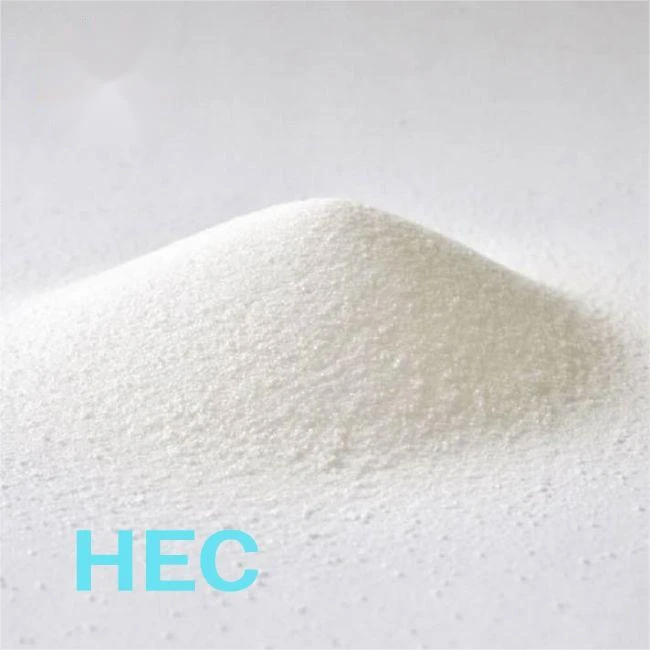
First off, hydroxyethyl cellulose (HEC) is a non-ionic, water-soluble polymer derived from natural cellulose — that’s important to note because it means we’re dealing with something renewable, which frankly is a big plus these days. In industrial settings, its primary function often centers around thickening, binding, and stabilizing. Think paints, adhesives, drilling fluids, cosmetics– all of which demand very specific rheological (flow) properties. And that’s where HEC shines. It doesn't just thicken: it adjusts the feel and flow behavior in ways that synthetic polymers often fail to replicate.
One thing I’ve noticed over the years is how customizable HEC can be. Depending on its degree of substitution and molecular weight, you get different viscosity, solubility, and sensitivity to salts or temperature changes. This variability means that vendors can tailor HEC grades to suit very particular formulations. For example, in a customer project I handled last year, we needed a grade that could maintain stability in highly alkaline environments. We ended up choosing a mid-viscosity HEC grade, and it performed admirably — no curdling or phase separation, which was a relief.
| Property | Typical Range | Unit |
|---|---|---|
| Degree of Substitution (DS) | 1.0 - 1.8 | - |
| Viscosity (2% in water, 20°C) | 100 - 4000 | mPa·s |
| Moisture Content | 5.0 max | % |
| pH (1% solution) | 5.0 - 8.5 | - |
In real terms, the choice of HEC grade can make or break the application. For instance, in paint manufacturing, it stabilizes pigments and controls the texture; in drilling muds, it helps suspend cuttings and reduce fluid loss; in personal care, it thickens shampoos while providing a smooth feel. I suppose what’s striking is how this same base material can adapt across such disparate fields.
Of course, not all suppliers are created equal, and that variety plays into both cost efficiency and performance. Here’s a quick look at how some well-known industrial HEC vendors stack up, focusing on aspects that matter most in my experience: grade variety, technical support, and lead times.
| Vendor | Grade Variety | Technical Support | Typical Lead Time | Pricing |
|---|---|---|---|---|
| Pezetech | Extensive (20+ grades) | Strong, responsive | 2-3 weeks | Competitive |
| Vendor A | Limited (8-10 grades) | Moderate | 3-5 weeks | Mid-range |
| Vendor B | Moderate (10-15 grades) | Limited | 4-6 weeks | Higher |
Choosing the right HEC supplier can feel like balancing a bunch of competing needs — price, availability, and support. Honestly, I’ve found that vendors like Pezetech stand out because they not only provide a wider spectrum of grades but also back their products with solid technical expertise. When a problem arises — and it almost always does — having that hands-on support can save weeks of troubleshooting.
At the end of the day, hydroxyethyl cellulose’s strength lies in its adaptability and reliability. Oddly enough, it’s not glamorous, but it’s exactly what you want when you need consistent quality and predictable performance. I hope sharing these insights helps illuminate why so many engineers, myself included, turn to this compound again and again.
Takeaway: The subtle art of choosing and using hydroxyethyl cellulose can seriously impact your product’s performance — it pays off to get it right.
- “Hydroxyethyl cellulose,” ScienceDirect, accessed 2024.
- Product datasheets from major HEC manufacturers.
- Industry user forums and material application reports, 2022-2023.
-
What Is VAE Powder? Complete Guide to Redispersible Polymer Powder (RDP) for ConstructionNewsApr.21,2026
-
HPMC Manufacturers in ChinaNewsApr.21,2026
-
What Is Redispersible Polymer Powder (RDP)? Complete Guide to VAE RDP for Mortar ApplicationsNewsApr.21,2026
-
Top Guide to Selecting Professional vae emulsion manufacturersNewsApr.16,2026
-
Viscosity of HPMCNewsApr.15,2026
-
HPMC Powder UsesNewsApr.15,2026